
Institut de la Communication, Lyon 2 Lumière University
This post is also available in: Français (French)
12 – 29 March 2026
Institut de la Communication, Lyon 2 Lumière UNIVERSITY
The Institute of Communication (ICOM) is one of the thirteen constituent parts of Lumière University Lyon 2. ICOM’s mission is to organize and manage training and research activities related to the various forms of communication, information, computer science, and digital creation. Our degrees cover all university levels, from the first year of Bachelor’s studies to doctoral studies. Since 1989, ICOM has occupied a unique position within the regional and national higher education landscape, based on strong links between its three areas of expertise, which constitute its richness and diversity, opening doors to promising careers: Culture & Creation, Information & Communication, and Computer Science & Digital Technology (data science, game design, computer graphics, organizational communication, editorial management, journalism, development of cultural structures, fashion, digital humanities, etc.). Finally, the Institute maintains strong ties with the professional world through a well-established network of international partners.
Website: https://icom.univ-lyon2.fr
Presentation of the class:
Coordinator: Albert Merino
This program brings together students from various disciplines at ICOM (Institute of Communication, University of Lyon 2), such as digital creation, game design, and communication, who are experiencing the world of video for the first time. They learn to use different editing and post-production software, exploring its creative possibilities and applying it to their respective specializations. This course opens the door to diverse audiovisual practices, sparking their curiosity for experimental approaches. For many, it’s their first encounter with genres like experimental cinema, video art, motion design, and digital creation. Students from often highly technical backgrounds find an opportunity to experiment and compare their skills with new narrative models, thus stimulating their creativity. Editing is at the heart of the course, studied through a variety of examples from numerous audiovisual fields. The historical evolution of editing is explored, from the beginnings of cinema in Lyon to the consolidation of audiovisual language and the avant-garde movements. The course examines the experiences of directors such as Méliès, Edwin S. Potter, Griffith, Eisenstein, Pudovkin, Kuleshov, and Hitchcock, as well as those of several video artists working in this field. The central exercise of the course is based on the concept of “found footage.” After analyzing the works of artists using this technique, students create their own projects. “Found footage” becomes a way to learn the principles of editing while deconstructing iconic audiovisual narratives that serve as a reference point for them. By reinterpreting cult films, video games, or other media, they question the foundations of audiovisual language while simultaneously rewriting it. We are submitting a selection of seven student projects completed during the first semester of the year to the Video Art Academy’s call for applications. For most of these projects, they represent their first contact with the world of video. The objectives of this course are: to master video techniques creatively, from shooting to editing and post-production; to understand the principles of visual storytelling, including composition, framing, directing, and camera movements; The course analyzes audiovisual works in order to deconstruct their codes and explore unconventional forms. It also encourages students to develop a personal vision and refine their style by exploring experimental approaches. “Found footage” is a central method for analysis and practice, offering a unique perspective on audiovisual storytelling. In this spirit, this year’s work covers a wide variety of formats, ranging from short films, documentaries, and motion design to several found footage pieces, music videos, video art, and experimental narratives.
VIDEO PROGRAMME
AMV – “Monde” | Axel DOUSSOUX | 2024
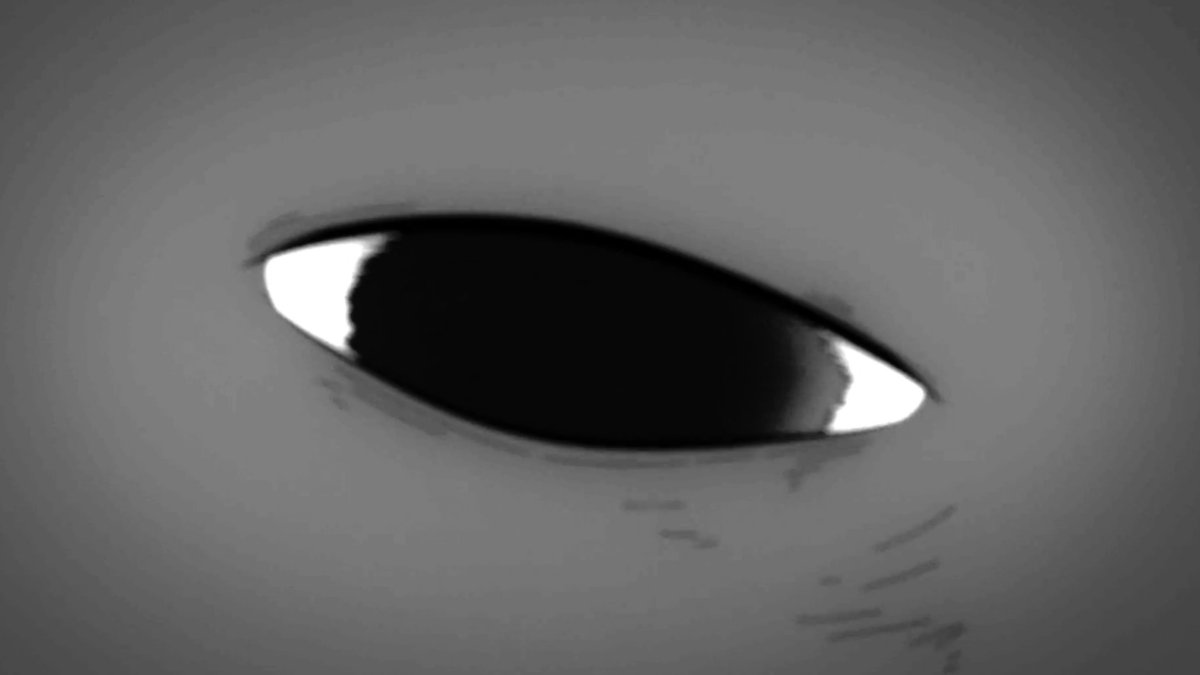
This found footage video offers an introspective and sensitive montage centered on the character of Denji, set to the track ‘Monde’ by Luidji. For approximately 1 minute and 30 seconds, the video explores the tension between discovering the world, inner isolation, and the quest for a love that transcends mere affection: a love understood as a fundamental need for existence. The montage begins with a gentle rhythm, placing Denji in his pre-Public Safety world: poverty, survival, and raw loneliness. The opening notes of the music accompany silent shots that reveal his awkward relationship with life, his body, and his very simple dreams—touching, eating, being seen. As the music swells, the AMV draws a parallel between the instrumental build-up and Denji’s discovery of the world through his interactions with others: Power, Aki, and especially Makima. The chosen shots focus less on the action than on moments of stillness: a look, a gesture, a grasped hand, a shared silence — all of which builds his new perception of what a ‘normal life’ could be.
The second part of the video introduces Reze, a minor and fragile figure whose presence embodies the possibility of a more authentic, almost innocent love. The music allows for a transition to a warmer, almost dreamlike tone: the discovery that love can be gentle, that the world can be tender. The film sequences reinforce this sentimental interlude and the emotional complexity it evokes in Denji. As the music tightens and fades, the AMV shows the rupture, the dissonance between what Denji hopes for and what the world actually offers him: a return to solitude, to wounds, to the ambiguity of those around him. The montage concludes with an open invitation: despite everything, Denji continues to search for meaning, connection, a world in which to exist differently. This project highlights an emotional reading of Chainsaw Man, centered not on violence or spectacle, but on the intimate fragility of a teenager shaped by lack and driven by the fundamental desire to be loved, seen, and recognized.

The greatest showman | Anthony BOURGEOIS, Alan DELVAUX | 2024
The video opens with sequences of instruments being played, capturing the gestures and energy of the music through everyday, expressive images. Gradually, a character appears and interacts through speech, establishing a subtle narrative connection with the viewer. This introduction lays the groundwork for an audiovisual experience where rhythm and emotion gradually evolve, preparing the ground for the musical and visual intensification that follows. As the music intensifies, the video intersperses a series of clips from different films, featuring large group dances, creating a sense of collective movement and celebration. Towards the end, the focus shifts to dance duets, bringing a more intimate and poetic dimension to the whole.
Fate | Remi GALANT | 2025
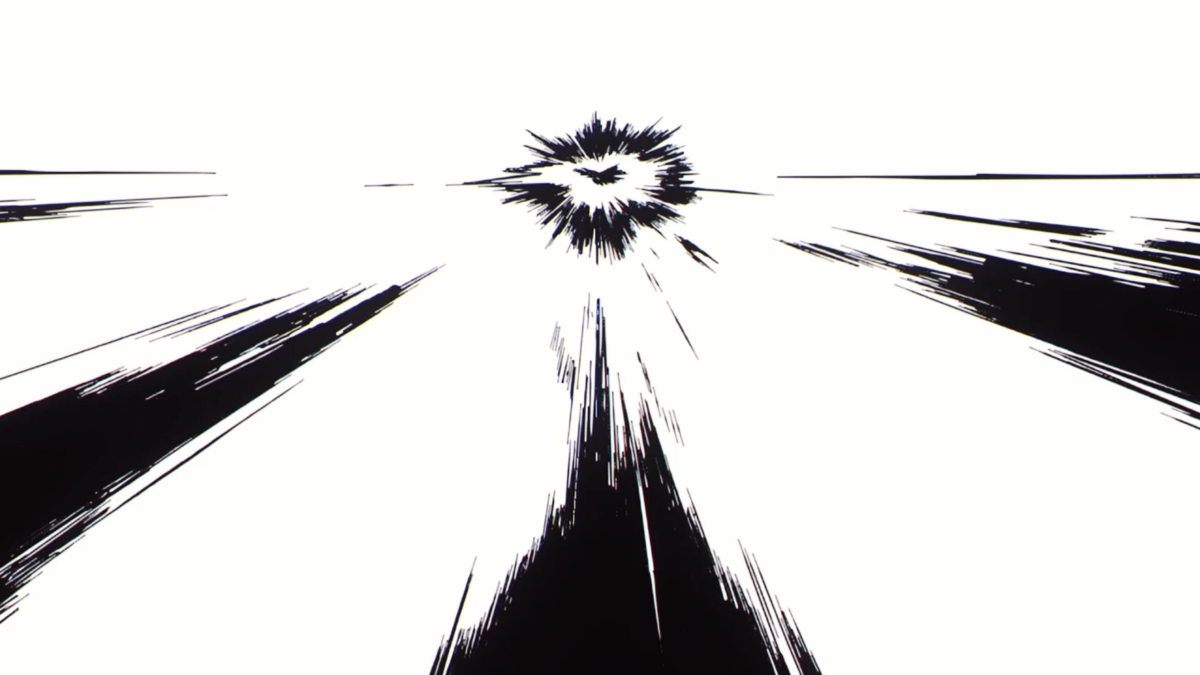
This experimental video project adopts a found footage approach, relying on the superimposition of different anime scenes in the manner of an AMV (Anime Music Video). The work combines recomposed images with catchy music, whose rhythm and structure determine the entire montage. Visual and sound effects contribute to the dynamism of the result and the transformation of the original images into a new narrative and sensory experience.
The video begins with calm, gradually building scenes before intensifying as the music progresses. The editing then accelerates, focusing on action and combat sequences enhanced by various editing effects. The clips are primarily drawn from the Fate saga—anime, video games, and cinematics—and their rearrangement explores the notions of appropriation and reinterpretation of existing images, with music serving as the central driving force of the visual experience.

Ode à la joie | Zehua Zeng | 2024
This project consists of an experimental musical montage constructed from everyday “button-pressing” gestures. The videos show different types of clicks: switches, elevator buttons, keyboards, etc. This action becomes the visual and sonic material for an interpretation of Beethoven’s Ode to Joy. Visually, I plan to use a screen divided into five zones, each corresponding to a degree of the melody. In each zone, a video presents a type of action (for example: pressing an elevator button, clicking a mouse, etc.). Each time a note of the Ode to Joy is played, the corresponding zone is activated. This setup will allow me to explore external editing, particularly repetition and juxtaposition. Should technical difficulties arise with the musical component, an alternative would be to construct the film as a montage of a continuous fall from heaven to earth, primarily from a subjective point of view. The film would begin with a leap into the void, possibly inspired by scenes from The Legend of Zelda: Tears of the Kingdom, then continue with found footage of falls and dives. The trajectory would end at ground level, for example, with a fall into water. This version relies entirely on the continuity of movement.
The main films used are The Greatest Showman, La La Land, Mamma Mia, A Monster in Paris, enriched with short, varied excerpts from many other films, contributing to a rich and dynamic montage that explores the relationship between music, movement, and visual emotion.
Space humans | Youmna AHAMED ALI | 2024
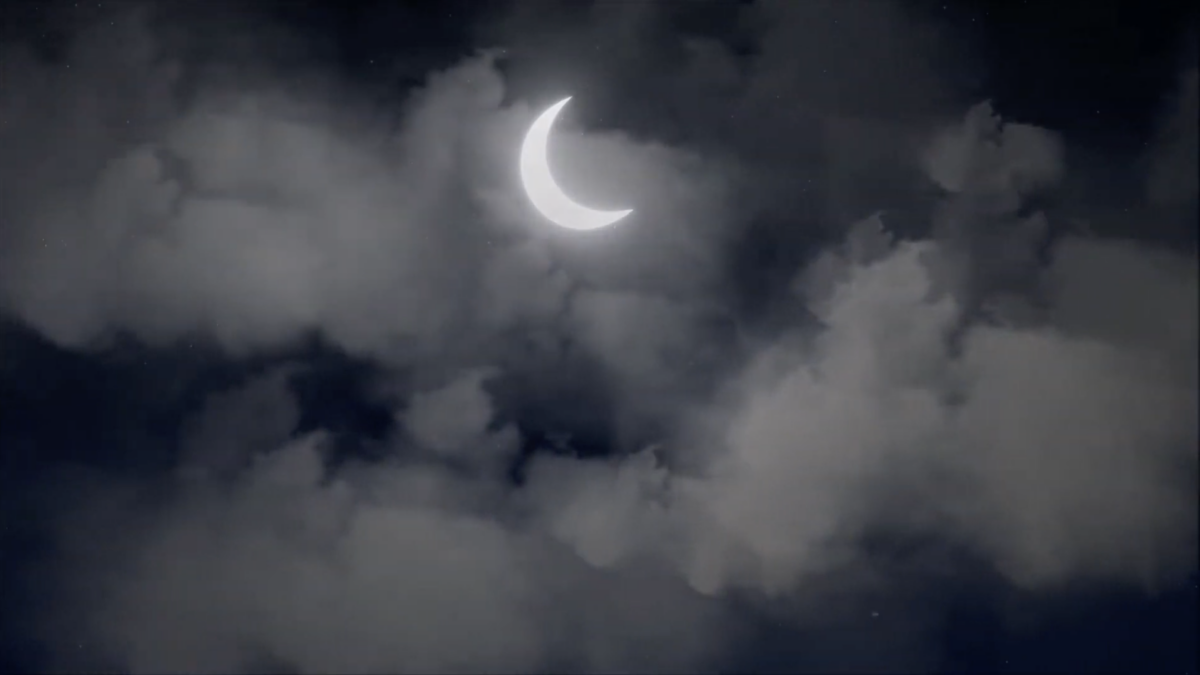
The video offers a sensitive exploration of humanity’s relationship with space and the cosmos. Through experimental editing, it interweaves fragments from documentaries and historical films devoted to space exploration, major scientific discoveries, and the first images of the universe. These images, placed in dialogue, allow us to trace a non-linear history of human fascination with space, between scientific knowledge, collective imagination, and the desire for exploration. The film also examines how the cosmos has been represented over time and through different media. From the first astronomical visions to the spectacular images produced by cinema and contemporary technologies, the video highlights how these representations shape our perception of infinity, the unknown, and our own place in the universe. The editing plays on the contrasts between scientific rigor and poetic staging, between documented reality and symbolic projection. Conceived as a deliberately short and non-exhaustive work, this project does not seek to provide a complete overview of space history, but rather to evoke wonder and reverie. By evoking familiar and emblematic images, the video invites the viewer to a contemplative experience, where the cosmos becomes both an object of knowledge and a space for imaginative projection.

Les quatres saisons | Yelen BERNARD | 2024
The video editing project revolves around the music of Antonio Vivaldi’s Four Seasons, whose highly figurative nature forms the central focus of the work. The four movements serve as a sonic structure and guide the choice of images, selected to complement the musical moods specific to each season. The editing offers a representation of the seasons through thematic footage, as well as through the use of color, emotion, and rhythm. Spring is associated with green and pink hues, evoking renewal and a lighter, more dance-like energy. Summer is characterized by a more sustained rhythm, with short, dynamic shots, while winter favors blue and white tones and longer shots, creating a calm and contemplative atmosphere. The project also incorporates the notion of the passage of time, both through the cyclical repetition of the seasons and through their connection to the different stages of human life, from the spring of childhood to the winter of death. This symbolic dimension relies on the use of excerpts showing the same scene across several seasons, as well as references from film and video games, such as Harry Potter, Spiritfarer, and The Curious Case of Benjamin Button, to illustrate the passage of time and the transformation of beings and landscapes. The footage used comes primarily from animated films and video games, mediums particularly rich in detailed, seasonal atmospheric scenes. Works like those of Studio Ghibli are a significant source of inspiration in this regard, as are video games, in which the seasons often play a central role in the construction of worlds and narratives.