
Paul Valéry University, Montpellier
This post is also available in: Français (French)
12 – 29 March 2026
Paul Valéry University, Montpellier
Paul-Valéry University is an institution specialized in literature, humanities and social sciences, languages, and the arts. Within it, the training provided by the Department of Cinema, Audiovisual, and New Media aims to offer students a general culture that not only situates the performing arts in history but also analyzes their position in the contemporary artistic institution (aesthetics, economics, sociology). Alongside this theoretical approach, practical training is offered, allowing students to become familiar with techniques, equipment, and skills. The Digital Creation Master’s program within this department aims to train versatile and independent professionals, equipped with fundamental artistic and technical skills in the field of animated imagery and interactive devices.
Website : http://master-2-cinema-et-audiovisuel/parcours-creation-documentaire
Presentation of the class:
Coordinator: Karen Guillorel
The Master 2 in Documentary Creation trains students for careers in documentary production through seminars focusing on theoretical and critical reflection, as well as workshops in writing, directing and editing, which provide project-based learning. This programme of short documentary films, Desktop, was produced as part of Karen Guillorel’s workshop, building on the work initiated by Claire Chatelet. This module invites students to explore the aesthetic and narrative challenges of new documentary forms by creating a Desktop film that uses digital technologies creatively whilst establishing a documentary perspective.
A rough cut is presented at the end of the 21-hour workshop. The production process is intensive: students will conceive, write and produce documentary-style films, consisting solely of images and videos found on the internet. In line with the definition of the Desktop documentary as proposed by Kevin B. Lee and his colleagues at SAIC (the School of the Art Institute of Chicago), the workshop comprises four stages:
– choosing topics, forming groups and presenting the concept
– selecting material from the internet and planning the script
– capturing footage on the computer
– editing using the selected material and processing the images, followed by re-editing
With a few exceptions, groups consist of two or four people so that tasks can be shared.
The 2025–2026 cohort of the Creadoc Master’s 2 programme stands out for the diversity of the subjects it tackles and the ways in which these are brought to life through image and sound: from drama to comedy, from social documentary to mockumentary, the eight projects are created using screenshots from social media, conference calls, online videos, prompts and exchanges with aprouticielle’s nonsense, scrolling through scientific articles as well as fan site pages (lore) or internet users’ exchanges on forums, Google Earth images or the use of Google Images functions.
VIDEO PROGRAMME
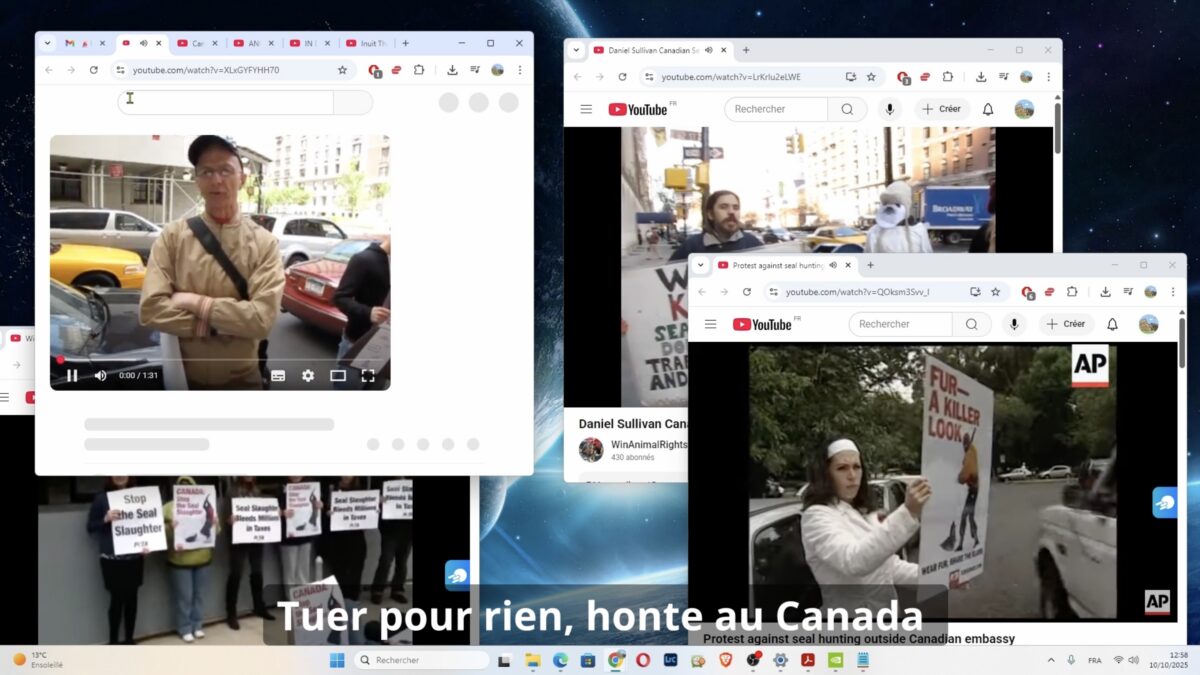
Starving Inuk | Nino BARTHELEMI–PAGES et Maëlle DREANO | 2025
The year 1987, following a global media campaign, saw the ban on seal hunting in Canadian territorial waters. Four decades on, what remains of this battle between soft toys in the shape of baby seals and the speeches of Brigitte Bardot, which moved the world? The fishermen’s anger has turned to other horizons and the NGOs have moved on to defend other causes. But who are the forgotten figures of this story?
This film traces the campaign waged by NGOs against the seal hunt. A practice industrialised by Canadian and Norwegian fishermen that sparked a wave of mobilisation by NGOs and animal welfare organisations because the hunt was so cruel. In this film, we trace the course of this mobilisation, highlighting not only the causes but also the consequences for the communities that depend on this very hunt. Through testimonies and archive footage, we give a voice to the indigenous peoples of the Arctic Circle.
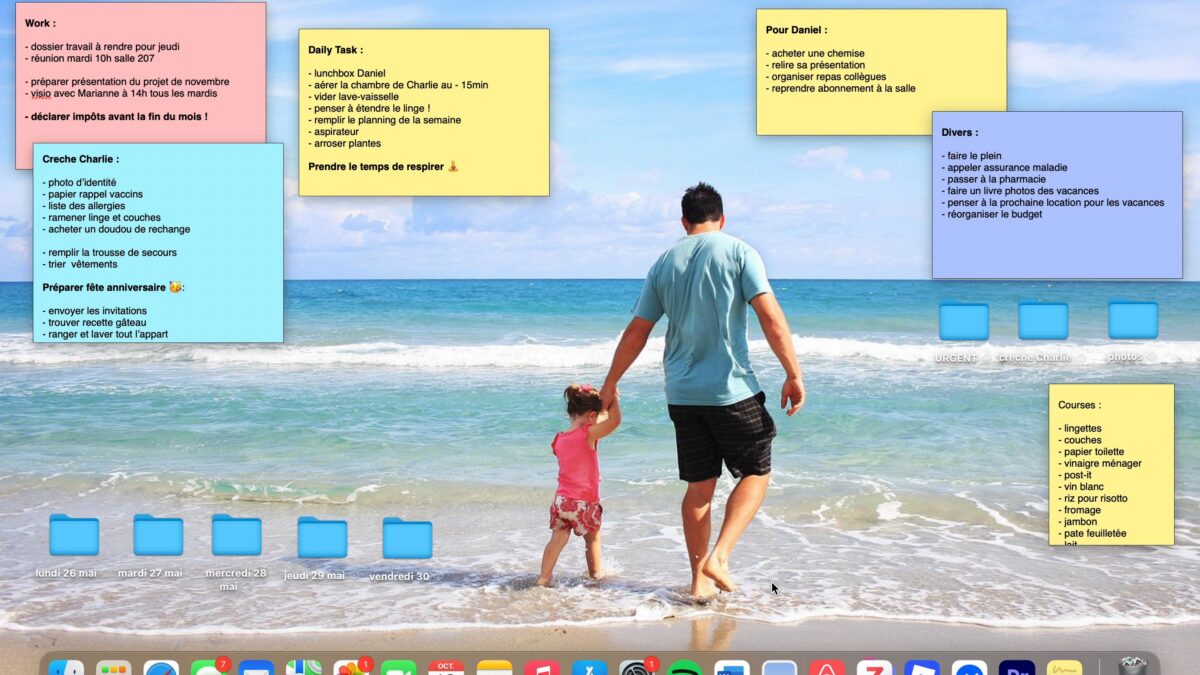
Mère, le plus beau métier du monde | Alicia Mallet, Ambre Velleyen et Solène Hebert | 2025
Overwhelmed by a mounting pile of chores, a young mother learns to juggle the demands of home life with returning to work. In search of distraction, she loses herself in a flood of TikTok videos that increasingly seriously address the mental burden of motherhood and the risks it entails. The testimonials scroll by as reality catches up with her, reminding her of her role as an exemplary mother and wife.
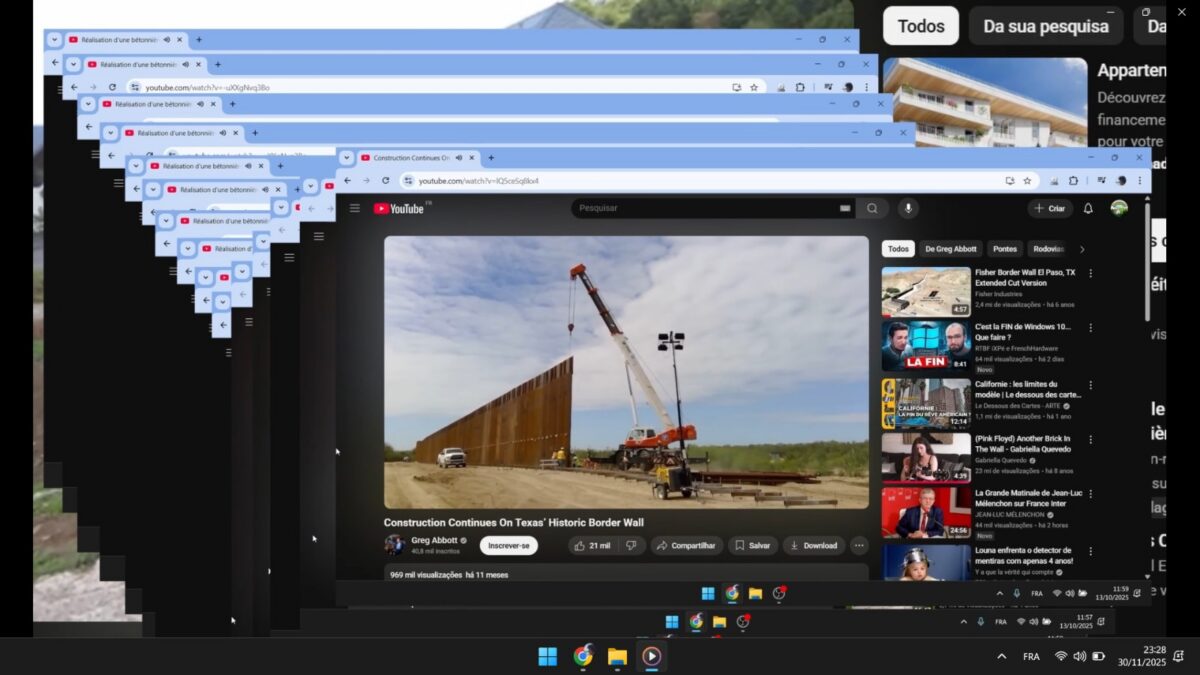
De Sable et de Ciment | Aloïs Dufaud, Gabriel Giband | 2025
This film begins long before borders. Long before walls. It begins where rocks are formed, in the Earth’s slow, patient, silent, almost invisible work.
Using footage found on YouTube, we follow the journey of the sand, grain by grain: from the eroding mountains, to the rivers that carry it, to the cement mixer that swallows the dust of the world to turn it into cement. Little by little, behind these innocuous images, another landscape takes shape: that of a border. A wall, stretching between the United States and Mexico, which has transformed the lives of those living in its vicinity. Some have found work there, an opportunity, sometimes a necessity. Others still remember the days when one could move freely from one hill to the next.
This film follows these movements—those of the Earth, of matter and of humans—to explore how a single grain of sand can, one day, become a border.